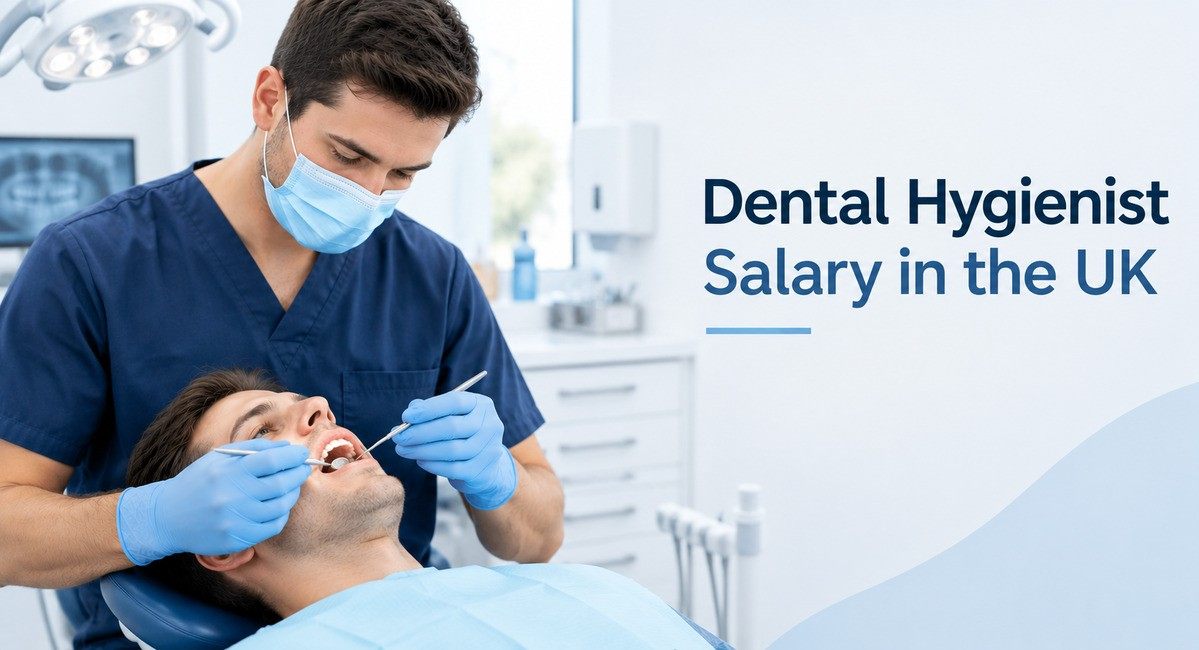
Dental hygienists play an important role in preventing oral health problems and helping patients maintain healthy teeth and gums. Their earnings depend on several factors, including experience, location, working hours and employment type.
The average dental hygienist salary in the UK can vary between NHS services, private dental practices and self-employed work. Newly qualified professionals may earn less than experienced hygienists with established patient lists and specialist skills.
This guide explains how much dental hygienists earn in the UK, including starting salaries, hourly rates, NHS and private practice pay and the factors that influence earnings.
What Is the Average Dental Hygienist Salary in the UK?
According to the National Careers Service, dental hygienists can earn around £32,000 a year at the starting level, rising to approximately £57,000 with experience. These figures provide a general guide rather than a guaranteed salary. Actual earnings vary by employer, region and working pattern.
Average Annual Salary
NHS salaries are £32,073 to £39,043 under its Band 5 guidance. It also gives a range of £39,959 to £48,117 for specialist hygienists at Band 6, with experienced hygienists who have training responsibilities potentially earning up to £49,387 to £56,515 at Band 7.
These figures are general NHS pay-band rates, not a guaranteed salary range for dental hygienists. Not all hygienists working with NHS patients are directly employed by the NHS, and the relevant pay structure may differ in Scotland, Wales and Northern Ireland. Applicants should check the specific vacancy and its employment terms.
Dental Hygienist Salary in the UK: At a Glance
Dental hygienist salaries in the UK vary according to experience, working hours, location and employment arrangements. Private practices may offer higher fees, while employed positions can provide a more predictable income.
- Entry-level salary: Around £32,000–£35,000 per year
- Experienced hygienist salary: Around £40,000–£55,000 per year
- Private practice earnings: Potentially £45,000–£70,000 or more
- Typical hourly rate: Varies by employer, location and contract
These figures are indicative rather than guaranteed. Part-time work and sessional contracts may result in different annual earnings.
A Comparison Table for Dental Hygienist Salary in the UK
| Role or employment type | Indicative annual earnings | How pay is calculated |
| Newly qualified hygienist | £32,000–£35,000 | Salary or hourly rate |
| Experienced hygienist | £40,000–£55,000 | Salary, hourly or sessional pay |
| Private practice hygienist | £45,000–£70,000+ | Hourly rate, salary or fee-based arrangement |
| NHS-employed hygienist | Depends on the advertised role and pay band | Salary or hourly pay |
| Self-employed hygienist | Depends on bookings and fees | Contracted rate or share of treatment fees |
Entry-Level Dental Hygienist Salary
Newly qualified dental hygienists may earn around £30,000 to £35,000 per year in suitable full-time roles, although starting pay varies considerably between employers. Part-time positions are often advertised with hourly rates or pay per clinical session rather than a full annual salary.
Starting salaries depend on the practice, location, contracted hours and the duties involved.
Experienced Dental Hygienist Salary
Dental hygienists with several years of experience may earn approximately £40,000 to £55,000 annually, depending on their working pattern and rate of pay. Those working consistent clinical hours at competitive rates may earn more.
Experience can strengthen a hygienist’s position when negotiating fees or applying for better-paid roles. However, annual income still depends heavily on the number of paid sessions available.
Private Practice Dental Hygienist Salary
Private practices can offer strong earning potential, particularly where appointment demand is high. Hygienists may be paid an hourly rate, a fixed salary or an agreed percentage of treatment fees.
Some arrangements use a share of treatment revenue, but the percentage varies by practice and contract. A higher percentage does not necessarily mean higher overall earnings if appointment books are not consistently full.
For example, a hygienist generating £1,000 in eligible treatment fees each week under a 35% fee-sharing arrangement would receive £350 for that week before any personal expenses and tax, assuming the agreement calculates payment on that basis.
NHS Dental Hygienist Salary
NHS dental hygienist pay depends on the employer, role and contract. Some positions are advertised with an annual salary, while others use hourly or sessional rates. NHS pay bands may apply to certain directly employed roles, but not every hygienist working with NHS patients is employed directly by the NHS.
Applicants should check the salary range and employment terms in each vacancy rather than assume a single national rate applies to all NHS dental hygienists.
You can also explore NHS vs private dentistry to understand the broader differences between these working environments.
Self-Employed vs Employed Dental Hygienists
The main difference is how income is earned and which costs the hygienist must cover.
| Factor | Employed hygienist | Self-employed hygienist |
| Payment | Usually salary or agreed hourly pay | Contracted fees or treatment-based income |
| Paid annual leave | Usually available under employment terms | Generally unpaid unless agreed otherwise |
| Pension | May include employer contributions | Usually arranged independently |
| Business expenses | Often covered by the employer | May include insurance, travel and accountancy |
| Income consistency | Usually more predictable | Depends on bookings and contract terms |
Dental Hygienist Salary by UK Location
Geographic location heavily impacts dental hygienist pay. Private practices in areas with steep operating costs and high local demand naturally offer higher compensation rates than smaller towns or rural communities.
Dental Hygienist Salary in London
London and the surrounding South East region offer the highest earning potentials in the UK.
- Average Hourly Rate: £41.11 per hour, compared to the UK national average of £38.96.
- Cost vs. Reward: While senior city-center hygienists can command upwards of £54 to £57+ per hour, these elevated earnings are balanced by higher regional costs for housing, travel and personal taxes.
- The NHS London Weighting Edge: Salaried NHS hygienists working in or near the capital qualify for the High Cost Area Supplement (HCAS). This is a percentage-based top-up to standard Agenda for Change pay bands designed to offset living costs:
| Area | 2026/27 Rate |
| Inner London | An extra 20% of basic salary (minimum £5,794, up to £8,746 per annum). |
| Outer London | An extra 15% of basic salary (minimum £4,870, up to £6,137 per annum). |
| Fringe | An extra 5% of basic salary (minimum £1,346, up to £2,270 per annum). |
Salaries Across Other UK Regions
Earning structures shift visibly across England, Scotland, Wales and Northern Ireland. Major regional cities command competitive pay scales, while remote practices rely more heavily on fixed regional structures:
| Region / City | Typical Hourly Pay Bracket | Notes & Context |
| South East / Commuter Belt | £38 – £54 per hour | Mirror London’s competitive marketplace closely. |
| South West & Midlands | £35 – £40 per hour | Strong demand in thriving cities like Bristol and Cheltenham. |
| Northern England & Wales | £30 – £35 per hour | Lower base hourly rates, but frequently offset by a lower cost of living. |
| Northern Ireland (Belfast) | £23 – £30 per hour | Historically sits as the lowest baseline average in the UK. |
How Much Does a Dental Hygienist Take Home After Tax?
The dental hygienist salary after tax in the UK depends on gross earnings, Income Tax, National Insurance and any applicable pension or student loan deductions.
The table below uses the standard England, Wales and Northern Ireland Income Tax bands for the 2026/27 tax year, with a £12,570 Personal Allowance and employee National Insurance at the standard 8% main rate. It assumes no pension contributions, student loan repayments or other deductions.
| Gross annual salary | Approximate monthly take-home pay |
| £32,000 | £2,213 |
| £40,000 | £2,693 |
| £50,000 | £3,293 |
| £57,000 | £3,635 |
These figures are illustrative estimates for employees taxed under the standard rules in England, Wales and Northern Ireland. Actual take-home pay may differ depending on tax code, pension contributions, student loan repayments and other deductions. Scotland has different income tax bands. Self-employed hygienists will need to calculate their tax and National Insurance according to their circumstances.
How Much Can a Self-Employed Dental Hygienist Earn?
A self-employed dental hygienist salary in the UK depends on hourly rates, available appointments and the number of weeks worked each year. Unlike salaried employees, self-employed professionals must manage their own business costs and may not receive paid annual leave or employer pension contributions.
For example, a hygienist charging £40 per hour and completing 25 paid clinical hours each week for 46 weeks would generate £46,000 in annual revenue.
This is revenue before expenses and tax, not take-home income. Actual profit will depend on costs such as professional indemnity, equipment, travel, practice fees and unpaid administrative time.
What Affects a Dental Hygienist’s Salary?
Several factors influence how much a dental hygienist can earn.
- Experience and skills: Experienced professionals may qualify for roles with higher rates or additional responsibilities.
- Location: Local demand, employer budgets and operating costs can influence pay.
- Employment type: Salaried, hourly and self-employed arrangements have different financial benefits and risks.
- Working hours: More paid clinical hours generally increase gross earnings.
- Employer and responsibilities: Specialist duties and senior positions may offer different salary structures.
- Availability of appointments: Self-employed professionals depend on consistent bookings to maintain revenue.
Final Thoughts
The dental hygienist salary in the UK varies according to experience, location, working hours and employment type.
NHS employment offers structured pay and benefits, while private practice and self-employment can provide different earning opportunities. Comparing salary, working conditions and expenses is the best way to assess the financial prospects of each career option.
Because of this flexible and lucrative market, the UK remains an incredibly attractive destination for global talent. For international dental professionals considering a move, understanding the registration pathways and specific opportunities for overseas dentists working in the UK is the perfect next step.
Frequently Asked Questions
Do dental hygienists get paid for cancelled appointments?
Payment depends on the employment contract or self-employed agreement. Employed hygienists may receive their normal salary, while self-employed hygienists could lose income if a patient cancels and the appointment cannot be filled. Cancellation policies can therefore affect total earnings.
Can dental hygienists increase their earnings by working at more than one practice?
Yes. Some dental hygienists work across multiple practices to increase their available clinical hours or access better-paying opportunities. However, they should account for travel time, scheduling gaps, professional costs and the possibility of unpaid cancellations when calculating the financial benefit.
Do dental hygienists get paid weekly or monthly?
Most employed dental hygienists are paid monthly, although payment frequency depends on the employer. Self-employed hygienists may invoice practices according to their contract.
Are dental hygienists paid during annual leave?
Employed hygienists usually receive paid annual leave under their employment terms. Self-employed hygienists generally need to account for holidays when calculating their annual income.
Does the type of dental practice affect a hygienist’s salary?
Yes. Pay may vary between general dental practices, specialist clinics, corporate dental groups and public-sector employers.