The Overseas Registration Exam (ORE) is the licensing examination for overseas-qualified dentists who want to practise dentistry in the United Kingdom. It is conducted by the General Dental Council (GDC) and assesses whether international dentists have the knowledge and clinical skills required to meet UK dental standards.
Passing the ORE is one of the main requirements for obtaining GDC registration if your dental qualification is not automatically recognised in the UK.
Who Needs to Take the ORE Exam UK?
The ORE exam is intended for dentists who obtained their primary dental qualification outside the UK and whose degree is not recognised for direct registration with the General Dental Council (GDC).
You may need to take the exam if you:
- Hold a dental degree from a non-recognised institution.
- Want to apply for UK dental registration.
- Intend to work as a practising dentist in the UK.
ORE Eligibility Requirements
Before applying for the ORE exam UK, you must meet the eligibility requirements set by the GDC.
Recognised Dental Qualification: You must hold a primary dental qualification that allows you to practise dentistry in the country where it was awarded.
English Language Requirements: English Language Proficiency: You must demonstrate your English language proficiency by achieving an Academic IELTS overall score of 7.0, with no individual band below 6.5.
Certificate of Good Standing: You may need to provide a recent Certificate of Good Standing from the dental regulator where you are currently or were most recently registered.
Identity and Supporting Documents: Applicants are required to submit certified copies of identification documents and educational certificates as part of the ORE exam application.
Clinical Experience: You must have completed at least 1,600 hours of supervised clinical experience treating patients as part of your dental education.
ORE Exam Structure and Syllabus
The ORE exam has two parts. You must pass Part 1 before you can book Part 2. Together, these exams assess whether your knowledge and clinical skills meet the standard required to practise dentistry in the UK.
ORE Part 1: Written Examination
Part 1 is a computer-based exam made up of two three-hour papers.
- Paper 1 (Applied Dental Science and Human Disease): Covers anatomy, physiology, pathology, microbiology, pharmacology, human disease and the management of medical emergencies.
- Paper 2 (Clinical Dentistry): Covers restorative dentistry, paediatric dentistry, orthodontics, oral surgery, endodontics, periodontology, prosthodontics, dental materials, radiology, law, ethics and infection prevention and control.
ORE Part 2: Clinical Assessment
Part 2 assesses your practical and clinical skills through four components:
- Dental Manikin: Complete clinical procedures using a dental manikin (phantom head).
- Objective Structured Clinical Examination (OSCE): Assesses communication skills, patient assessment, clinical decision-making and professional judgement.
- Diagnostic and Treatment Planning (DTP): Develop treatment plans using patient records, radiographs and clinical information.
- Medical Emergencies: Demonstrate how to recognise and manage medical emergencies, including Basic Life Support (BLS) and CPR.
ORE Application Process
Applying for the ORE exam UK involves several stages. Preparing your documents in advance can help avoid delays.
Step 1: Check Your Eligibility
Confirm that you meet the eligibility requirements and that your dental qualification requires the Overseas Registration Exam for GDC registration.
Step 2: Prepare Your Documents
Gather all required supporting documents, including your identification, dental qualification and any certificates requested by the GDC.
Step 3: Submit Your Application
Complete the ORE exam application and upload the required documentation according to the GDC’s instructions.
Step 4: Book Your Exam
Once your application has been approved, you can book an available ORE Part 1 examination slot. After successfully passing Part 1, you will become eligible to book ORE Part 2.
Step 5: Sit the Examination
Attend your examination on the scheduled date and follow all instructions issued by the examination centre and the GDC.
Documents Required for the ORE Exam Application
Before submitting your ORE exam application, ensure you have the required documents ready. While requirements may vary depending on your circumstances, applicants are generally asked to provide:
- Valid passport or other proof of identity
- Primary dental qualification
- Academic transcripts (if requested)
- Certificate of Good Standing
- Evidence of English language proficiency (where applicable)
- Certified copies of supporting documents
ORE Exam Fees (2026)
The General Dental Council (GDC) sets these fees based on the actual cost of running the exams.
Here is the exact breakdown of the ORE costs for 2026:
- Part 1 Exam: £485 per attempt
- Part 2 Exam: £6,967 per attempt
- Application Processing: £115 (non-refundable)
- Medical Emergencies Re-sit: £686 (if you only need to re-sit this specific component of Part 2)
Key Information for Candidates
- When to pay: You must pay the full exam fee online at the exact time of booking your slot.
- How to pay: All bookings and payments are handled securely through your online MyGDC account.
From 2026, VAT applies to ORE fees for the first time. The updated fee structure has also been introduced under the new contract between the GDC and UCL Consultants Ltd (UCLC), which runs from 31 May 2026 to 30 May 2027. As a result, the Part 2 examination fee has increased to reflect the cost of delivering the examination, expanding capacity, investing in specialist clinical facilities and equipment and the inclusion of VAT.
ORE Exam Dates and Booking
Once your application is approved by the General Dental Council (GDC), you can book your exam. From 2026, all ORE exam bookings must be made through your MyGDC account, so it’s important to ensure your account is set up and ready before the booking window opens. The GDC releases specific examination schedules throughout the year and places are allocated on a first-come, first-served basis.
Upcoming Examination Dates
The official exam schedules for 2026 and 2027 are split by exam part:
- 25–26 August 2026
- 14–15 October 2026
- 2–3 February 2027
- 6–7 April 2027
- 10–13 September 2026
- 26–29 November 2026
- 21–24 January 2027
- 4–7 March 2027
- 15–18 April 2027
How to Prepare for the ORE Exam?
Preparing for the ORE exam takes a mix of structured theory revision and hands-on clinical practice. A few strategies that make the biggest difference:
- Study the official GDC ORE syllabus so you know exactly what both parts cover.
- Build a realistic study timetable, splitting time between Part 1 theory and Part 2 clinical preparation.
- Practise Part 1 multiple-choice questions under timed conditions to build speed and accuracy.
- Attend clinical mock sessions for Part 2, including communication and treatment-planning scenarios based on real patient cases.
- Revise UK dental ethics and GDC professional standards, since these are tested throughout both parts.
- Get guidance on your route from the start. At Saint Visage, we help overseas dentists confirm whether ORE or LDS fits their qualification and prepare their full GDC registration in parallel so everything’s ready the moment they pass, letting you focus your energy on the exam itself, not the paperwork.
What Happens After Passing the ORE?
After successfully passing both parts of the Overseas Registration Exam, you can apply for GDC registration.
Once registered, you can:
- Practise dentistry in the UK.
- Apply for NHS and private dental positions.
- Continue your professional development through continuing education.
- Build your career in general or specialist dentistry, subject to relevant requirements.
Common Challenges for International Dentists
Many candidates face similar challenges while preparing for the ORE UK, including:
Limited Exam Places: Booking a slot is highly competitive. Exam places often sell out within minutes of the booking window opening.
High Financial Investment: The exam fees are substantial. Candidates must also budget for travel to London test centres and specialized preparation resources.
Limited Number of Attempts: Candidates are allowed up to four attempts for each part of the ORE exam. Exceeding this limit means you will no longer be eligible to sit that part of the examination.
Strict Five-Year Deadline: Part 2 must be passed within five years of first attempting Part 1, making efficient preparation essential.
Adapting to UK Guidelines: The exam tests strict adherence to UK clinical standards. Candidates must align their practice with National Institute for Health and Care Excellence (NICE) guidelines.
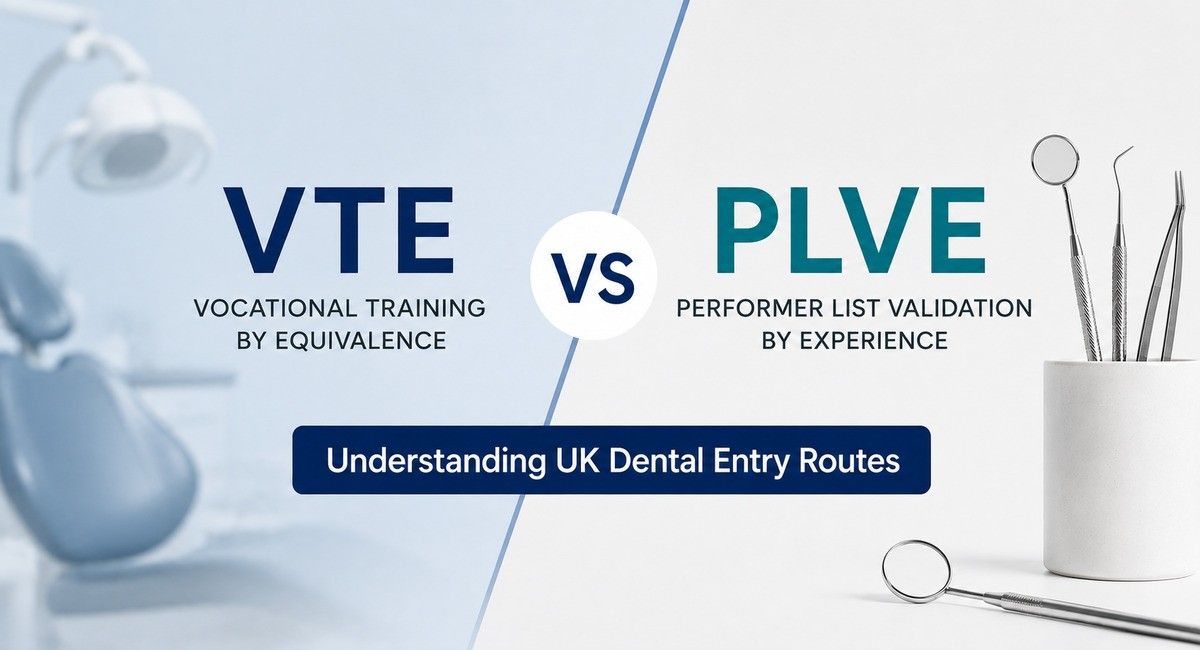
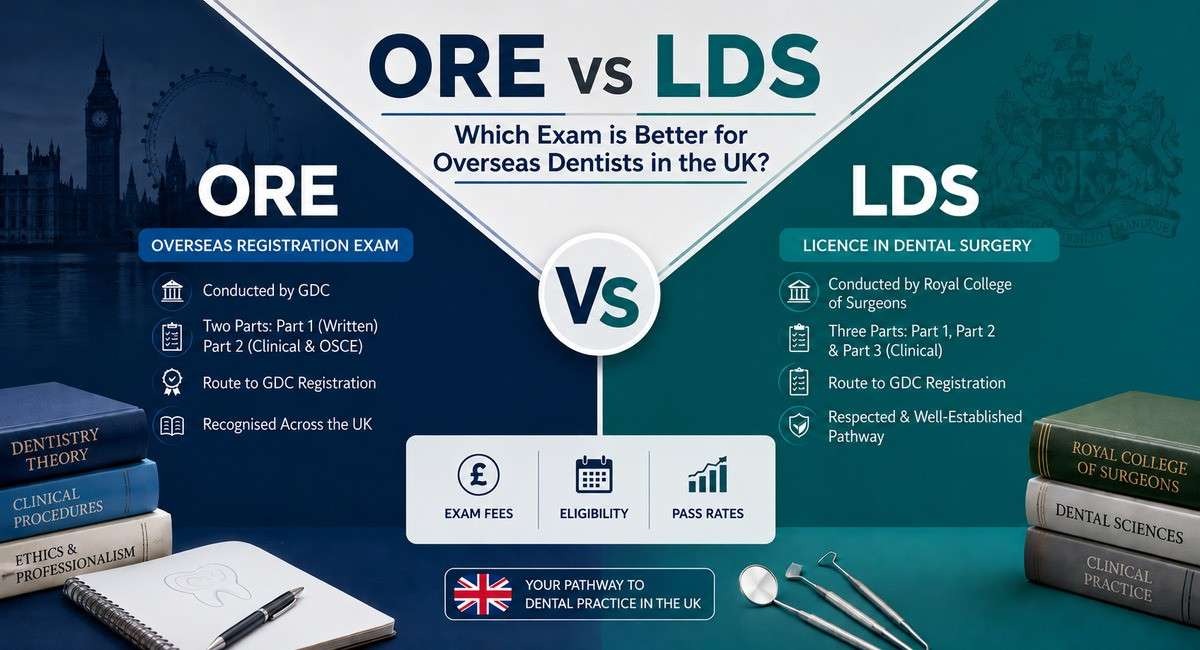
The License in Dental Surgery (LDS) exam serves as an alternative assessment route to gaining UK registration. To find out which option suits you best, read our comprehensive comparison in our ORE vs LDS guide.
Final Thoughts
The Overseas Registration Exam (ORE) is an important step for overseas-qualified dentists seeking UK dental registration. Understanding the eligibility requirements, exam structure, application process and preparation strategy can help you approach the examination with confidence.
Before applying, always refer to the latest guidance published by the General Dental Council (GDC) to ensure you have the most up-to-date information on eligibility, fees, booking and registration requirements.
Frequently Asked Questions
Is the ORE exam difficult?
The ORE is a rigorous assessment of the knowledge and clinical skills required to practise safely in the UK. However, recent GDC data shows average pass rates of around 71% to 75% for Part 1 and 71% for Part 2 in 2025, indicating that well-prepared candidates have a strong chance of success.
Who is eligible for the ORE exam?
Dentists qualified outside the UK/EEA with a recognized dental degree. You must prove English proficiency (e.g., IELTS 7.0+) and provide a Certificate of Good Standing. Additionally, you need at least 1,600 hours of hands-on, face-to-face clinical patient experience completed during or after your studies.
Can I take ORE Part 2 before Part 1?
No. Candidates must successfully pass ORE Part 1 before they are eligible to book ORE Part 2.
How long does the ORE exam process take?
The overall timeline depends on application processing, exam availability and whether both parts are passed on the first attempt.
What happens if I fail the ORE exam?
If you do not pass an examination, you may be able to resit it, provided you remain within the permitted number of attempts and comply with the GDC’s examination regulations.