The UK continues to face a shortage of dental professionals, creating strong opportunities for international candidates. As a result, many overseas dentists work in the UK each year through the General Dental Council (GDC) registration process.
However, moving to the UK as a dentist is not as simple as applying for a job. Most international dentists UK pathways involve qualification checks, English language tests, licensing exams and visa applications. Understanding these steps early can save time, money and unnecessary delays.
Can Overseas Dentists Work in the UK?
Yes, overseas-qualified dentists can legally practise in the UK, but they must first register with the General Dental Council (GDC). The GDC is the official regulator responsible for dental professionals across England, Scotland, Wales and Northern Ireland.
Without GDC registration, dentists cannot legally treat patients in the UK. The route you follow depends on where you earned your dental qualification.
Dentists With Recognised Qualifications
Some dental qualifications are automatically recognised by the UK. Dentists with these qualifications may be eligible for direct registration without taking the Overseas Registration Exam (ORE).
Eligibility rules can change, so applicants should always verify their status with the GDC before applying.
Dentists With Non-Recognised Qualifications
Most overseas qualified dentist applicants fall into this category. If your degree is not recognised, you will usually need to pass either:
- ORE exam
- LDS exam
These exams assess whether your clinical knowledge and practical skills meet UK standards.
The UK healthcare system relies heavily on foreign-trained dentists, especially in areas with shortages of NHS dental services. Because of this demand, qualified overseas dentists often have strong long-term career opportunities after registration.
Step-by-Step Process for Overseas Dentists in the UK
Step 1: Check Your Eligibility for GDC Registration
The first step is confirming whether you qualify for registration with the GDC.
The General Dental Council registration process usually requires:
- Proof of dental qualification
- Academic transcripts
- Internship evidence
- Passport and identity documents
- Certificate of good standing
- Work history documents
You must also prove your English language ability.
That is:
- IELTS
The GDC typically requires a high English standard because dentists must communicate clearly with patients and colleagues.
Step 2: Pass the ORE or LDS Exam
If your qualification is not directly recognised, you must pass a licensing exam before practising dentistry in the UK.
The two main options are:
| ORE | LDS |
| Conducted by the GDC | Conducted by the Royal College of Surgeons |
| Most common pathway | Alternative registration route |
| Two-part exam | Multiple assessment stages |
| Focuses on clinical competence | Tests clinical and theoretical knowledge |
What Is the ORE?
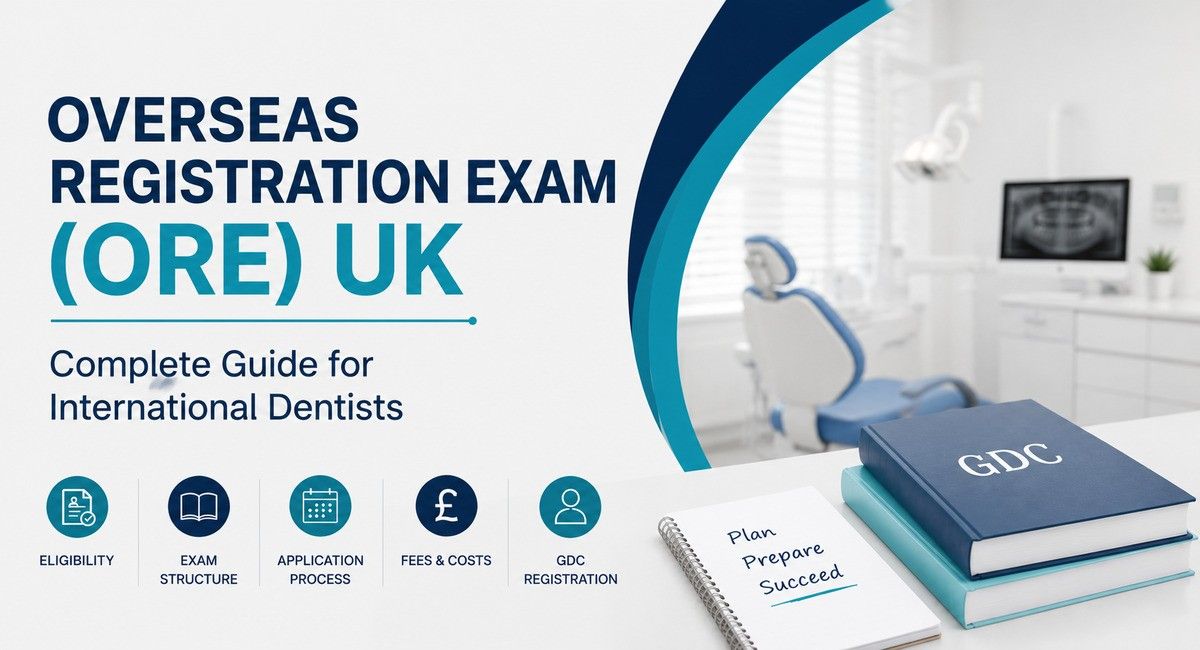
The overseas registration exam (ORE) is designed for overseas dentists whose qualifications are not recognised by the UK.
The exam has two parts:
ORE Part 1
Tests theoretical knowledge through computer-based exams.
Subjects include:
- Human disease
- Clinical dentistry
- Dental law and ethics
- Health and safety
ORE Part 2
Tests practical and clinical skills.
This includes:
- Dental procedures
- Patient communication
- Diagnosis and treatment planning
- Medical emergency management
What About the LDS Exam?
The LDS exam is another pathway accepted for GDC registration. It is conducted by the Royal College of Surgeons and may suit some candidates depending on availability and preference.
Both exams are respected routes toward obtaining a UK dental licence.
Step 3: Apply for GDC Registration
After passing the required exam, the next step is submitting your final registration application.
The UK dental licensing process includes:
- Application review
- Identity verification
- Qualification checks
- Fitness-to-practise declarations
- Registration fees
Once approved, you receive your GDC registration number and can legally work as a dentist in the UK. Obtaining this registration is essential because it gives you the official licence to practise dentistry in the UK.
Step 4: Secure a Job Offer in the UK
After receiving GDC registration, you can begin applying for dental roles across the UK.
Most overseas dentists start with:
- NHS practices
- Private dental clinics
- Mixed practices offering both NHS and private care
There is strong demand for dentists in many regions, particularly in underserved areas where NHS access is limited.
Common job titles include:
- Associate dentist
- General dental practitioner
- Locum dentist
Many employers also offer support with relocation, mentoring and visa sponsorship for experienced candidates. While dental groups such as Saint Visage Dental Group provide broader long-term support with relocation, clinical integration, mentorship and career development for overseas dentists moving to the UK.
When searching for NHS dentist jobs in the UK, overseas applicants often use:
- Dental recruitment agencies
- NHS job portals
- Private dental group websites
- LinkedIn and dental job boards
Some employers actively advertise overseas dentist jobs with sponsorship from the UK, making the relocation process easier for international candidates.
Before accepting a role, review:
- Contract terms
- NHS targets
- Commission structure
- Sponsorship support
- Clinical mentoring opportunities
Step 5: Apply for a Skilled Worker Visa
Most overseas dentists require a work visa to live and practise in the UK.
The most common route is the Skilled Worker visa, often linked to healthcare occupations.
To apply, you usually need:
- A confirmed job offer
- A Certificate of Sponsorship (CoS)
- Proof of English language ability
- A valid passport
- Financial evidence in some cases
Many clinics that hire overseas dentists already hold sponsorship licences. This makes the visa process more straightforward for qualified applicants.
The skilled worker visa route allows dentists to:
- Work legally in the UK
- Bring eligible family members
- Access a pathway towards long-term settlement
Costs of Working as a Dentist in the UK
Relocating to the UK as a dentist requires financial planning.
Common expenses include:
- English language exams
- ORE or LDS exam fees
- GDC registration costs
- Visa application fees
- Travel and relocation expenses
Approximate costs may include:
| Expense | Estimated Cost |
| IELTS exam | £215 – £265 (Varies By Country) |
| ORE Part 1 | £485 |
| ORE Part 2 | £6,967 |
| GDC registration | Multiple Steps Included |
| Skilled Worker visa | Varies by application type |
| Relocation and accommodation | Variable |
Challenges Overseas Dentists Should Expect
While the UK offers strong career opportunities, overseas dentists should prepare for some challenges during the transition process.
One of the biggest issues is competition for ORE exam places. Many applicants wait months for available seats.
Other common challenges include:
- High examination costs
- Adapting to UK clinical standards
- NHS workload pressure
- Communication expectations
- Understanding UK dental regulations
Strong communication skills are particularly important because patient communication standards requirements are taken seriously by employers and regulators.
How Saint Visage Supports Overseas Dentists Moving to the UK
Moving to the UK as a dentist involves more than passing exams and securing registration. Many overseas dentists also need guidance with relocation, NHS systems, clinical standards and career development.
Saint Visage Dental Group supports dentists through different stages of this process, from registration guidance to long-term professional growth.
Support With Registration and Relocation
For many international dentists, the registration process can feel complicated and time-consuming. Saint Visage helps dentists understand the requirements for working in the UK, including documentation, compliance and relocation steps.
The group also provides guidance for dentists moving to the UK through sponsored opportunities and Skilled Worker visa pathways.
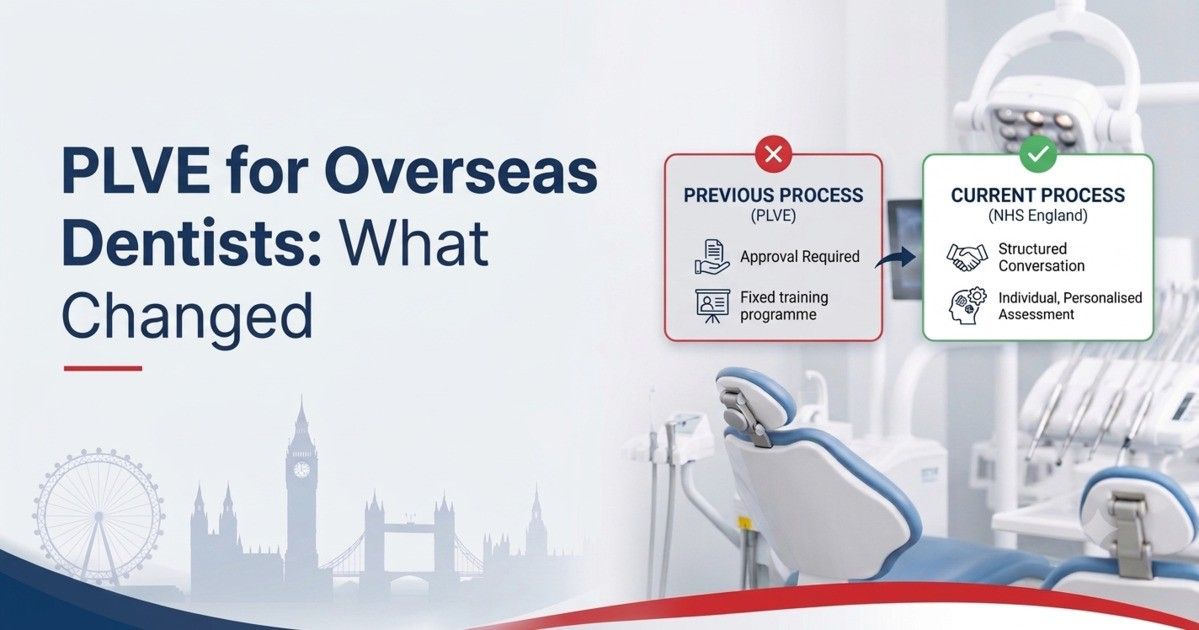
PLVE and NHS Integration
Adjusting to UK dentistry can take time, especially for dentists entering the NHS system for the first time.
Saint Visage supports overseas-qualified dentists through PLVE pathways, mentorship and clinical guidance designed to help them adapt to UK practice standards and patient expectations more confidently.
Clinical Development Opportunities
In addition to relocation support, Saint Visage focuses on long-term career progression.
Dentists have access to mentoring and further training in areas such as:
- Associate Development Programme
- Implant Dentistry Programme
- Cosmetic Development Programme
A Long-Term Career Focus
Many overseas dentists are not only looking for a job in the UK. They are looking for stability, professional growth and ongoing support.
Saint Visage takes a long-term approach by supporting dentists with mentorship, development opportunities and structured career pathways as they build their careers in the UK.
Final Thoughts
The process for how overseas dentists can work in the UK involves several important steps.
Although the journey can take time, the UK continues to offer strong opportunities for qualified international dentists due to ongoing workforce demand. At Saint Visage, we support overseas dentists with GDC guidance, relocation, mentorship, clinical integration and long-term career development in the UK.
By preparing early and understanding the full process, applicants can improve their chances of building a successful long-term dental career in the UK.
Frequently Asked Questions
Is the LDS easier than the ORE?
Neither exam is officially considered easier. The best option depends on your preparation style, exam availability and personal preference.
How much do dentists earn in the UK?
Dentist salaries vary depending on experience, location and type of practice. Private and mixed practices may offer higher earning potential than NHS-only roles.
Is there a shortage of dentists in the UK?
Yes. The UK continues to face shortages of NHS dentists, especially in underserved areas. This has increased demand for qualified overseas dentists.
Can overseas dentists get NHS jobs in the UK?
Yes. Many NHS and mixed dental practices hire overseas-qualified dentists after GDC registration. Some employers like Saint Visage also offer visa sponsorship and mentoring support.
Can overseas dentists work in private clinics instead of the NHS?
Yes. Overseas dentists can work in private, NHS or mixed practices after obtaining GDC registration and the correct visa status.