Working as a dentist in the UK requires registration with the General Dental Council system. Whether you qualified in the UK or overseas, you must be registered with the GDC before you can legally practise dentistry.
Understanding the GDC registration process can be challenging, especially for internationally qualified dentists. This guide explains the eligibility criteria, required documents, application process, fees and what to expect after registration.
What Is General Dental Council (GDC) Registration?
The General Dental Council is the statutory regulator for dental professionals in the United Kingdom. It protects patients by ensuring that only qualified and competent professionals are allowed to practise.
General Dental Council registration is a legal requirement for dentists, dental hygienists, dental therapists, orthodontic therapists, dental nurses, clinical dental technicians and dental technicians.
Once registered, your name is added to the GDC Register, allowing you to work in both NHS and private dental practices across the UK. Practising without GDC registration is unlawful and may result in legal action.
Who Needs GDC Registration in the UK?
Anyone wishing to practise dentistry in the UK must complete GDC registration before treating patients.
UK-qualified Dentists
If you have completed an approved UK dental degree, you can usually apply for registration directly after graduation.
Overseas-qualified Dentists
Dentists who qualified outside the UK must meet the GDC’s eligibility requirements before applying. The registration route depends on where your qualification was obtained and whether it is recognised by the GDC.
EU/EEA Dentists
Following Brexit, dentists who qualified in the EU or EEA may be required to complete additional qualification recognition procedures, depending on where and when they obtained their dental degree.
What are the Routes for GDC Registration?
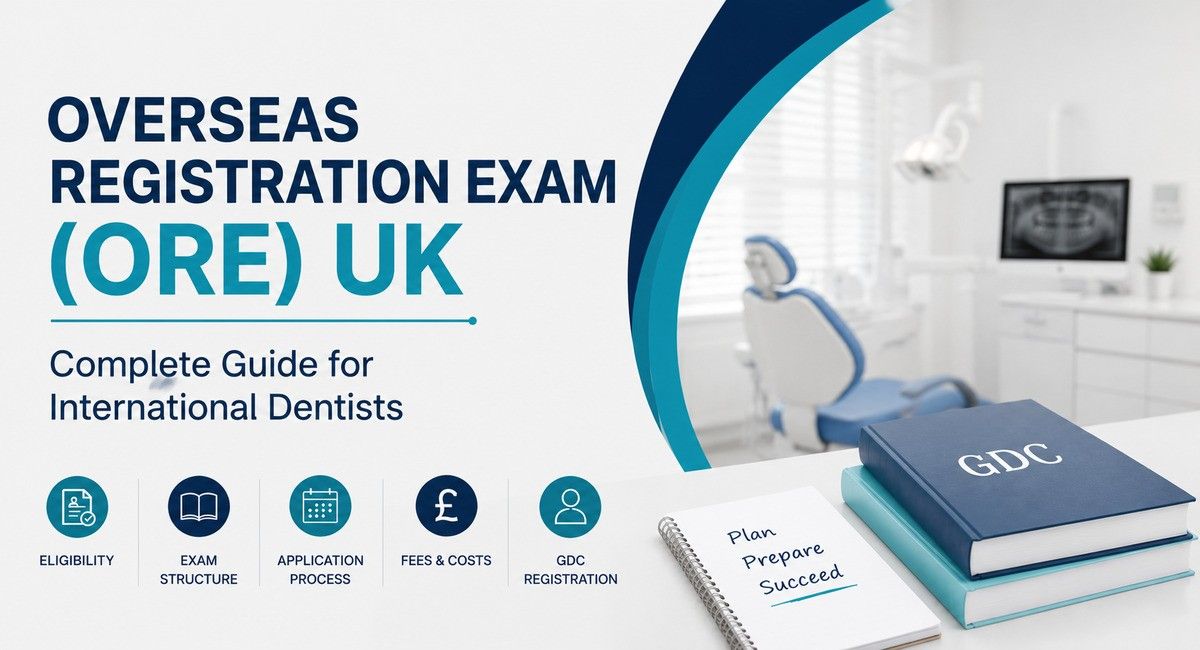
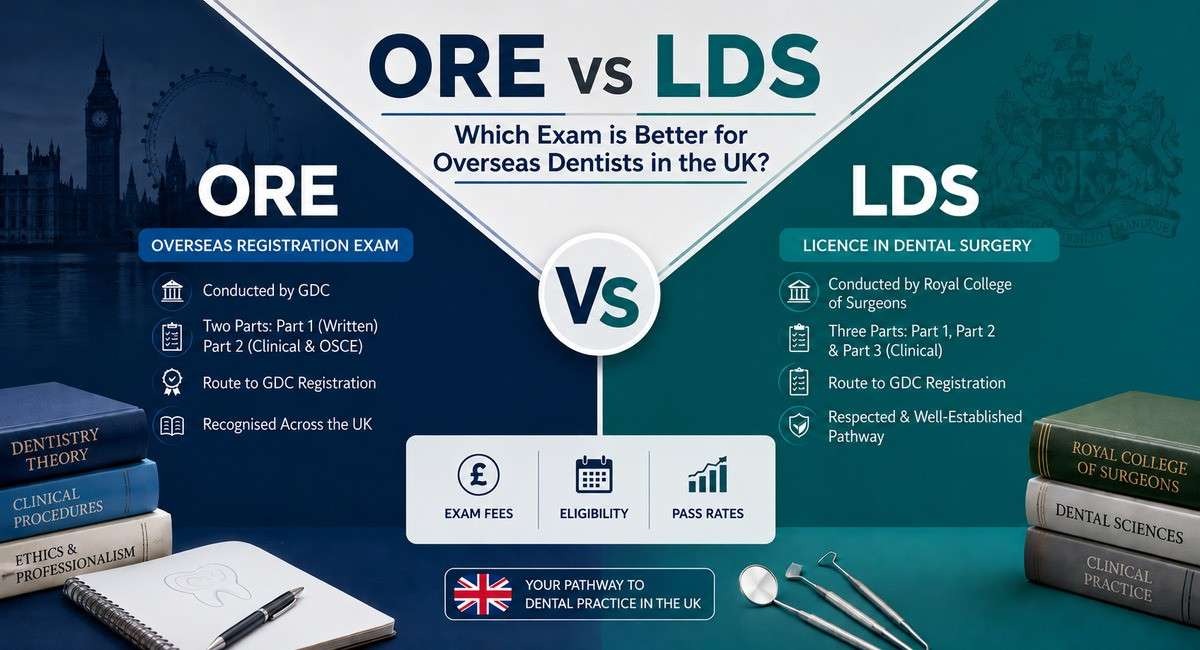
The Overseas Registration Examination (ORE) and the Licence in Dental Surgery (LDS) are the two official licensing exam routes for international dentists seeking full General Dental Council registration. Both exams test your clinical competence against UK dental standards and passing either allows you to legally practise unsupervised in the UK.
The key differences between the two routes include:
Exam Organiser: The ORE is run directly by the GDC purely as a regulatory filter to join the register. The LDS is a qualification administered by the Royal College of Surgeons (RCS) of England.
Structure: While the ORE has two parts (a theoretical written exam and a multi-component practical clinical assessment), the LDS has three parts. For the LDS, Part 1 is a remote written exam, Part 2 focuses on clinical reasoning and OSCEs and Part 3 is a dedicated, hands-on dental manikin assessment.
Professional Status: Passing the ORE grants you entry to the UK dental register. Passing the LDS also grants you entry to the register, plus prestigious post-nominal letters (LDS RCS Eng) and membership to the Royal College.
GDC Registration Process: Step-by-Step
Understanding the GDC registration process helps applicants prepare their documents and avoid unnecessary delays.
Step 1: Confirm Your Eligibility
Check whether your qualification is recognised by the GDC or whether you’ll need to sit the ORE or hold an equivalent LDS.
Step 2: Sit the ORE or LDS (Overseas Applicants)
Dentists with unrecognised overseas qualifications must pass the Overseas Registration Examination or pass an equivalent LDS, before applying.
Step 3: Gather Your Documents
Collect your qualification certificates, proof of identity and character reference and have them certified (and translated, if required).
Step 4: Submit Your Application via MyGDC
Complete and submit your application online through the GDC’s MyGDC portal.
Step 5: Pay the Application Fee
Initial fees start at £41.42 for UK-qualified applicants and £117.23 for overseas-qualified dentists.
Step 6: Undergo Verification Checks
The GDC verifies your identity and confirms your professional standing before assessing your application.
Step 7: Get Approved and Registered
Once approved, pay the registration fee to be added to the register and begin practising in the UK.
Documents Required for GDC Registration
Before you begin your GDC registration application, make sure you have the following documents ready:
- Dental qualification certificate
- Academic transcripts detailing your course of study
- Valid passport for identity verification
- Certificate of Good Standing from your dental regulatory authority
- English language proficiency results
- Evidence of clinical work experience, where relevant
GDC Registration Fees
GDC fees are set annually and vary depending on your registration route and profession:
- Initial application fee (UK-qualified dentist/DCP): £41.42
- Initial application fee (overseas-qualified dentist): £117.23
- Registration fee: varies depending on the date you’re registered (paid once your application is approved)
- Annual Retention Fee, 2026 (to remain on the register): £698 for dentists, £108 for DCPs
- Admin charge for return of original documents: £10
GDC Registration Timeline
Processing times depend on your route and how quickly your documents are in order:
UK-qualified dentist/DCP applications: Assessed within 15 working days.
Overseas Registration Examination (ORE) Applications: Initial exam eligibility applications are assessed within 60 working days.
Overseas-qualified DCP Applications: Assessed within 4 months by law. However, these non-exam routes face longer queues due to fixed monthly assessment panel limits.
ORE Part 1 and Part 2 (if required): Adds significant time (often 1–3 years) because exam slots are highly limited and demand remains exceptionally high.
Peak periods: Timelines can extend further during peak processing periods, particularly during summer graduation windows.
Common Reasons GDC Registration Applications Are Delayed or Rejected
Many applications are delayed because of avoidable mistakes. Common issues include:
- Missing or incomplete application forms.
- Incorrectly certified documents.
- Expired identity or professional documents.
- Missing English language evidence where required.
- Outdated Certificate of Good Standing.
- Inconsistent personal details across documents.
- Failure to respond to requests for additional information.
Common Challenges in GDC Registration
Several recurring issues can slow down or complicate an application:
- Limited ORE exam slots, with high demand often leading to long waiting periods before a place becomes available
- Document certification errors, such as using an unauthorised certifier or missing the required certification wording
- English language test scores falling just below the required IELTS threshold, sometimes requiring a retake
- Delays in obtaining a Certificate of Good Standing from overseas dental authorities
- Incomplete or inconsistent documentation, which can push an application back into processing queues
How Saint Visage Can Help You with GDC Registration?
Saint Visage has supported over 1,000 overseas dentists through GDC registration guidance and into UK practice, with a named coordinator assigned to guide you through every stage of your case. We handle document preparation, attestation and application submission, tracking your case through to GDC approval and we offer IELTS guidance where English language evidence is required.
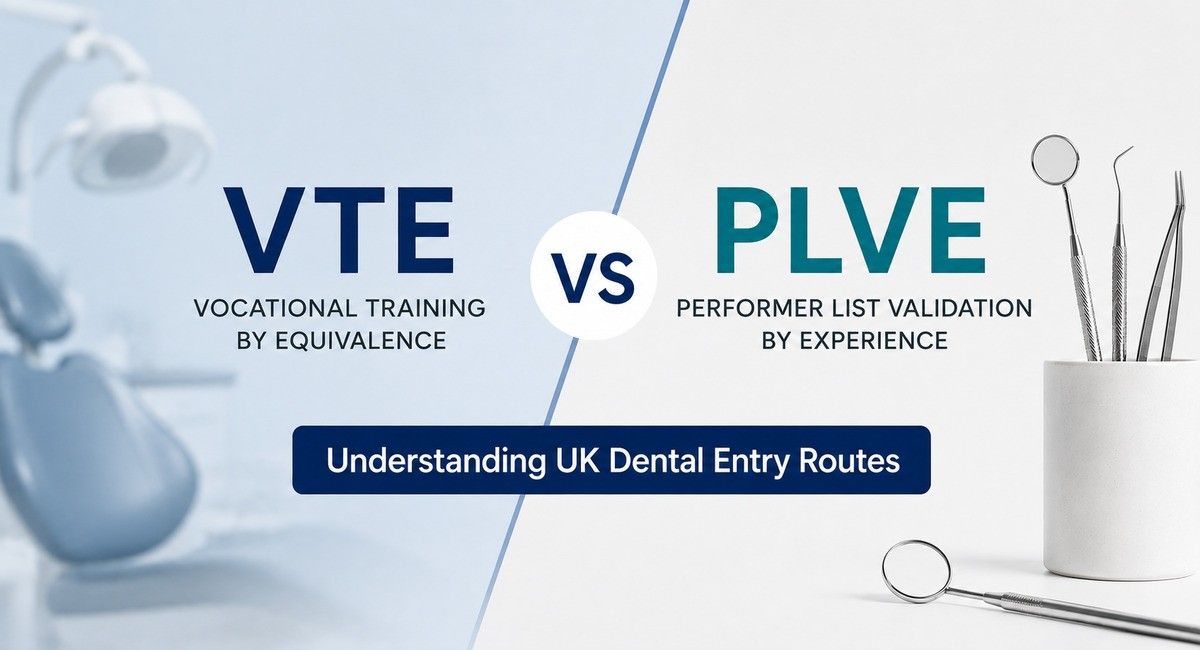
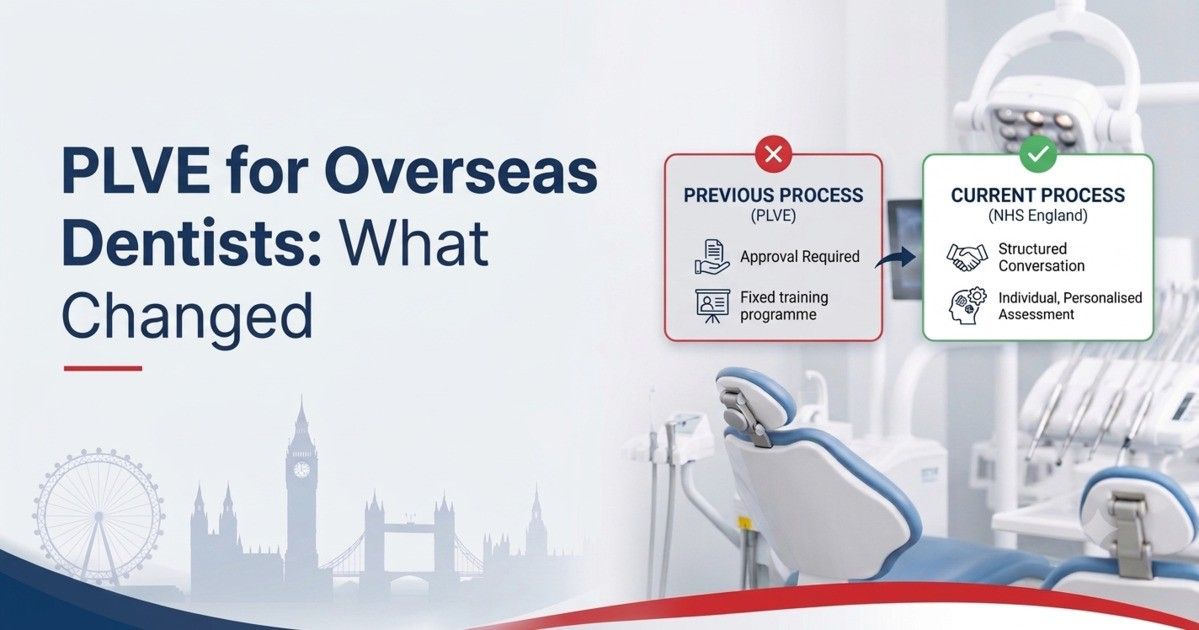
For internationally qualified dentists, we provide route guidance for the ORE and LDS pathways and support GDC registration once your exams are passed, along with PLVE mentorship where it’s required for your registration status.
Final Thoughts
Completing General Dental Council registration is an essential step for any dentist wishing to practise legally in the UK. Whether you are a UK graduate or an internationally qualified dentist, understanding the GDC registration requirements, preparing the correct documents and following the registration process can make your application much more straightforward.
By ensuring your application is complete, paying the required registration fees and meeting your ongoing professional obligations after registration, you can begin or continue your dental career with confidence in the UK.
Frequently Asked Questions
Can I work as a dentist in the UK without GDC registration?
No. It is illegal to practise as a dentist in the UK without being registered with the General Dental Council (GDC).
What is the Annual Retention Fee (ARF)?
The Annual Retention Fee (ARF) is the yearly fee that registered dentists must pay to remain on the General Dental Council (GDC) Register. For the 2026 registration period, the ARF for dentists is £698 per year. Dentists who hold specialist titles must also pay an additional £72 per specialist title annually. ARF for dental care professionals (DCPs) is £108.
How long does GDC registration take?
UK-qualified applicants are typically processed within 15 working days, while standard overseas applications take up to four months by law. However, if your international route requires sitting the Overseas Registration Examination (ORE), limited slot availability can add one to three years to the overall timeline.
What are the IELTS requirements for GDC registration?
You must achieve a minimum overall band score of 7.0 in IELTS Academic (with no single section below 6.5).
What are the career opportunities after GDC registration?
Once registered, you can legally practice in the UK as an associate dentist or dental care professional (DCP) within the National Health Service (NHS) or across private dental practices. GDC registration also opens paths to corporate dental roles, hospital residency posts, research positions, university teaching and eventual clinical specialisation.