Not all mentorship models create the same developmental experience. In dentistry, the structure behind mentorship can significantly influence how associates learn, progress and build confidence within clinical practice.
Many dental organisations promote mentorship as part of associate development. However, the level of involvement, accountability and day-to-day guidance can vary considerably between practices.
Some environments operate through wider corporate systems where mentorship is delegated across management layers. Others adopt a more embedded approach through principal-led mentorship, where support is integrated directly into clinical practice.
For associate dentists, understanding these differences matters. Mentorship is not only about access to support. It is also about how closely that support is connected to clinical work, case progression and long-term professional growth.
What Is Associate-Led Dental Mentorship?
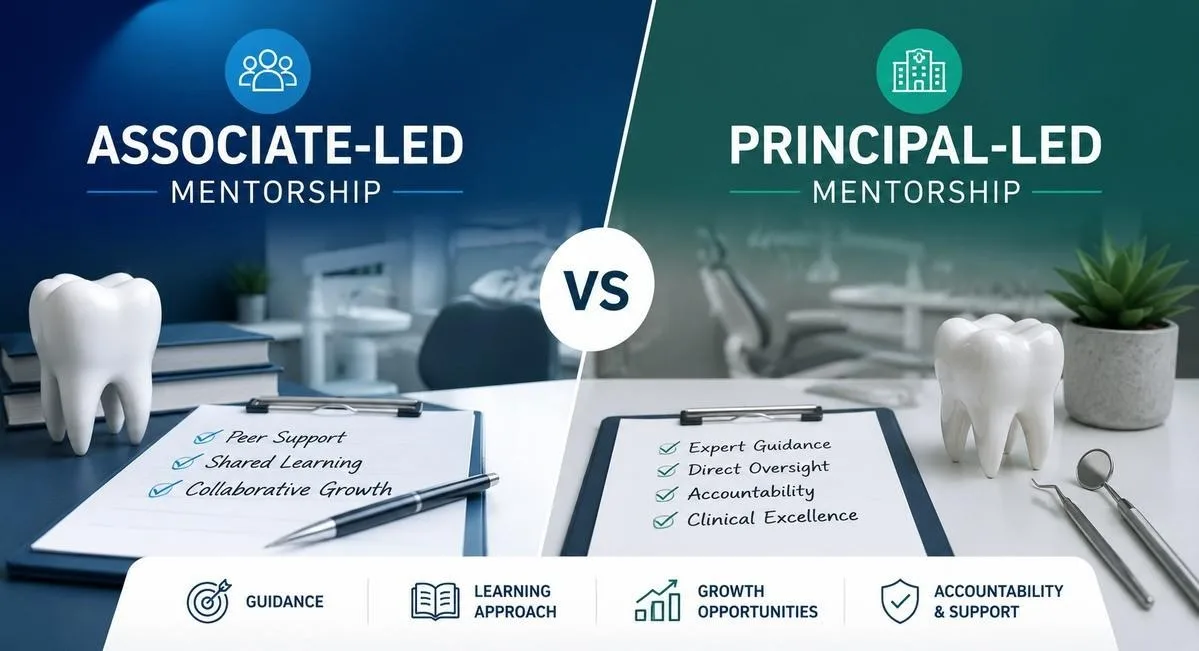
Associate-led mentorship is often found within larger dental groups and corporate structures. Support is delivered through wider management systems rather than directly within the clinic.
Mentorship is commonly delegated across:
- senior associates
- clinical managers
- training leads
- support teams
How Support Is Delivered in Associate-Led Models
In many corporate environments, mentorship is organised through scheduled reviews and structured systems. Guidance usually happens during planned check-ins rather than throughout the working day.
Oversight can also sit across wider management layers. This may reduce direct involvement in day-to-day clinical work and associate progression.
As a result, support can feel more periodic than embedded within practice life.
What Is Principal-Led Dental Mentorship?
Principal-led mentorship places support directly within the clinic environment. Guidance comes from the principal who owns and runs the practice.
This creates a closer connection between mentorship, accountability and clinical development.
At principal-led dental clinics, associates often receive:
- direct feedback
- regular case reviews
- real-time support
- ongoing progression guidance
Why Does Direct Involvement Matters?
In principal-led environments, the mentor usually has a direct stake in clinic performance and associate development.
If an associate underperforms, the clinic owner is affected directly. This creates stronger accountability and greater investment in progression.
Support also becomes part of the working day. Questions, case discussions and feedback happen naturally within clinical practice.
Embedded Guidance vs Scheduled Support
One major difference between mentorship models is how support is delivered.
In corporate structures, mentorship may rely on scheduled reviews or delegated systems. Guidance can operate separately from daily clinical work.
In principal-led mentorship, support is more embedded into practice life. Associates often receive immediate feedback and closer oversight throughout the day.
How Mentorship Structures Influence Associate Growth
The mentorship environment shapes how associates develop over time. Regular feedback and closer oversight improve confidence in clinical decision-making.
Associates often develop stronger skills in:
- Treatment planning
- Patient communication
- Case management
- Clinical judgement
More direct guidance also supports faster progression within everyday practice.
Why More Dentists Are Looking for Principal-Led Environments
Many associates are now looking for more personalised support within dentistry. They want closer access to experienced clinicians and stronger day-to-day guidance.
This shift has increased interest in principal-led dental clinics where mentorship is more integrated into clinical work.
Direct access to leadership creates a more supportive and development-focused environment for dentists.
The Role of Case Oversight in Clinical Development
Case oversight plays an important role in professional growth. Regular reviews can help associates refine treatment planning and improve clinical confidence.
In principal-led mentorship, case discussions are often more immediate and consistent because the mentor is present within the clinic.
This allows associates to receive guidance in real clinical situations rather than only during scheduled reviews.
Corporate Structures vs Clinic-Level Mentorship
Corporate dental groups often provide structured systems and operational consistency. These frameworks can support associates across larger organisations.
However, mentorship may sit within wider management structures rather than at clinic level.
In clinic-level mentorship, support is more closely connected to daily practice. Associates benefit from stronger continuity, direct feedback and closer progression tracking.
The Value of Accountability in Mentorship
Accountability can influence the quality of support associates receive.
When mentors are directly connected to clinic performance, there is often greater investment in associate progression and patient outcomes.
This level of involvement may create:
- More consistent guidance
- Stronger oversight
- Closer professional support
How Saint Visage Supports Associate Development
At Saint Visage, our approach is built around principal-led mentorship within real clinical environments. Associates receive closer guidance, regular case oversight and day-to-day support directly within practice.
To support different stages of clinical growth, Saint Visage offers three focused development pathways.
The Associate Development Programme is designed to support dentists looking to strengthen confidence, clinical decision-making and long-term progression within practice.
The Implant Development Programme provides guided exposure to implant dentistry through closer mentorship, case discussions and clinically integrated learning.
The Cosmetic Development Programme focuses on aesthetic dentistry, helping associates develop their skills within cosmetic treatment planning and patient-focused outcomes.
Final Thoughts
Mentorship has a direct impact on how associate dentists develop within practice. While structured corporate systems can provide operational support, they may not always offer the same level of day-to-day clinical involvement.
With principal-led dental mentorship, guidance is more closely connected to real clinical practice. Associates benefit from direct oversight, immediate feedback and mentors who are personally invested in both clinic performance and professional growth.
For many dentists, this creates a stronger learning environment. It also supports greater confidence, accountability and long-term clinical progression.
Frequently Asked Questions
What should I look for in a dental mentorship programme?
Many associate dentists look for:
Direct clinical guidance
Regular case reviews
Accessible mentors
Real-time feedback
Progression opportunities
How can I identify genuine mentorship in a dental practice?
Associates should ask who provides mentorship directly, how often cases are reviewed and whether support is available during day-to-day clinical work.
Can mentorship improve confidence in treatment planning?
Yes. Consistent guidance and case discussions can help associates make more confident clinical decisions and improve treatment planning skills over time.
Why is day-to-day clinical support important for associates?
Day-to-day support allows associates to receive immediate feedback during real clinical situations. This can improve learning speed and strengthen clinical confidence.
What makes mentorship more personalised in principal-led clinics?
In principal-led clinics, mentors are directly involved in daily practice. This creates closer communication, stronger accountability and more consistent support.